
English Language
Discover how our English Language programme builds strong literacy foundations and nurtures confident communicators through engaging learning experiences, reading, writing and purposeful use of technology.
Department Heads and Members
English Language department staff and roles
Mr Vincent Chua, | Mdm Ann Toh Bee Choo, | Mdm Nur Shirin Bte Yaman Yuen, |
Miss Eulindra Lim Weiqing, | Mdm Nurashikin Bte Mohamed Zamrabi, | Mrs Teng - Lim Li-Chern, Anisia |
Mrs Lee – Sandra Phong Pei Shan | Mdm Lim Suat Peng Tina | Mdm Valerie Low Baoqin |
Miss Harsharan Kaur d/o T S | Miss Eliza Law Wen Yu | Mdm Cheong Yueh Tinng Evelyn (CAJT) |
Mr Tan Khuan Pheng (FAJT) | Mdm Selina Ng Hui Min (FAJT) | Mdm Vineetha Kalathil Thomas (RT) |
Key Approaches
STELLAR (Strategies for English Language Learning and Reading) is an English Language instructional programme adopted at all levels in Frontier Primary School. The STELLAR 2.0 vision is to nurture children who love reading and have a strong foundation in the English Language.
This will be achieved by:
1. strengthening our students’ language and reading skills
2. promoting a positive learning attitude
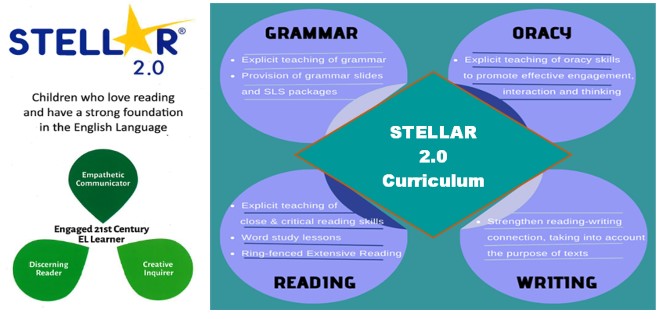
Students are immersed in language learning and are exposed to a variety of genres that are engaging and age-appropriate. The use of different strategies and pedagogies with explicit instruction, as well as enriching language experiences, allow our students to appreciate the language within and beyond the classrooms.
As students progress across the levels, they learn to make the transition from learning to read to reading to learn. They are eased into reading silently as well as reading longer texts without visual support. Teachers continue to provide students with guidance in the processes of planning, writing and reviewing before they apply these skills in writing independently.
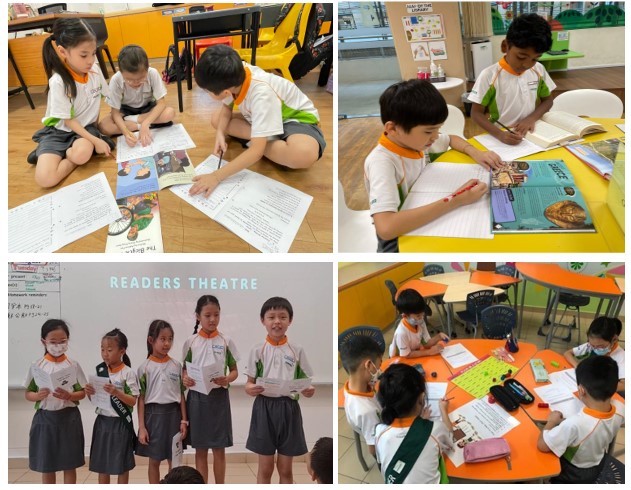
Students are also given differentiated support at various points of instruction to optimise their learning. Teachers carry out Differentiated Instruction by designing appropriate activities to support, reinforce and extend their learning. They also harness e-Pedagogy design learning experiences that enhance student engagement, subject mastery and help students acquire and strengthen their emerging 21st Century Competencies such as Collaboration, Communication and Information skills.
EdTech in EL
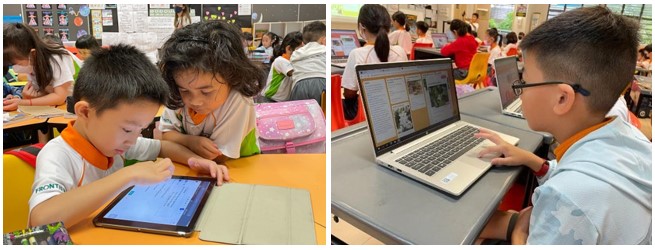
The EL department harnesses and leverages technology to enhance teaching and learning. The teachers use the Think.Tech.Grow school-wide teaching and learning framework to:
promote and deepen students’ thinking processes;
design tech-enabled learning experiences; and
provide feedback to students for their growth in learning
We aim to build strong fundamentals in our students with digital literacy and technological skills to prepare them for a technology-transformed world.
Key Programmes & Activities
Read@Frontier - Young Readers Programme (Primary 1 to 6)
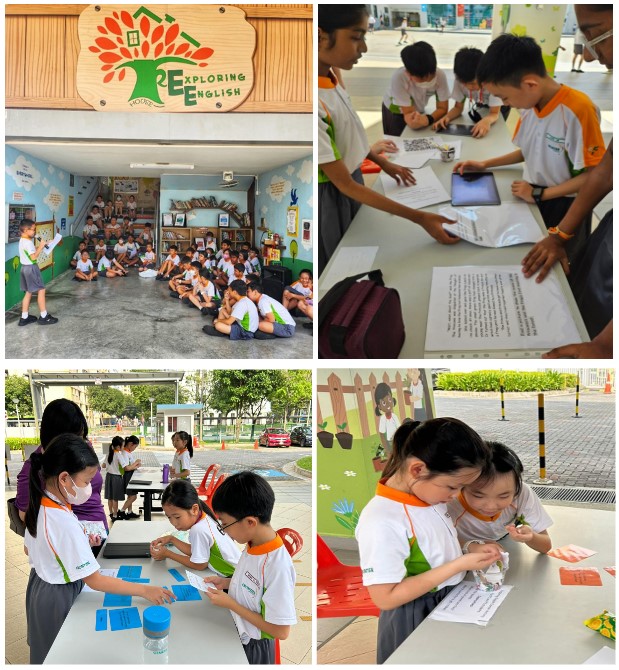
The Young Readers Programme aims to encourage and excite our students to be confident and avid readers. Students will participate in Extensive Reading activities such as Speech and Drama, Show and Tell and Readers Theatre, and regularly visit our school library, Frontopia, to explore and appreciate different book genres.
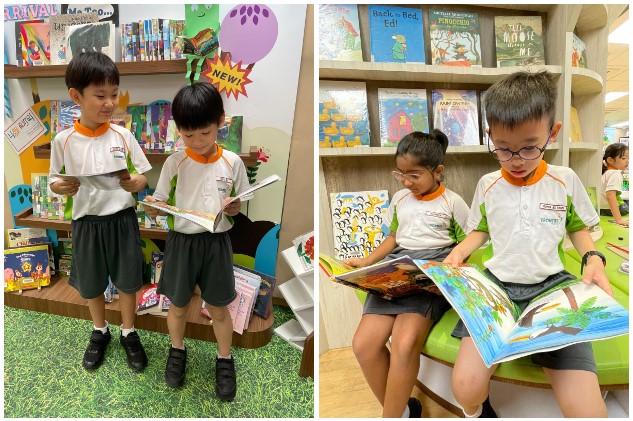
Students get to participate in termly thematic activities during their recess at the Exploring English Corner. These reading-related activities include quizzes, storytelling sessions and gaining new knowledge through information on the notice boards and reading good writing pieces on display.
Buddy Reading Programme
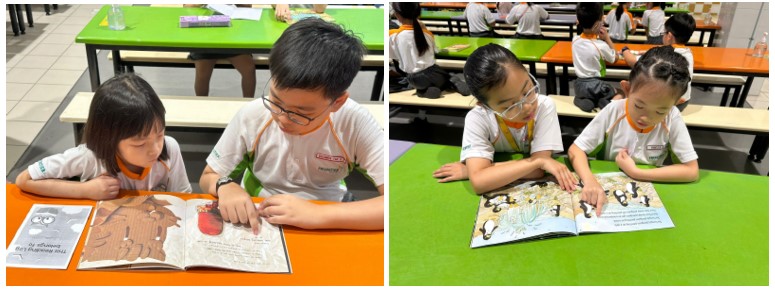
This programme supports emergent readers in Primary 2 to help them improve their reading skills. A group of Primary 4 Frontierers with good reading and speaking skills, driven by their interest to serve and contribute, will engage and motivate their juniors in reading twice a week in the morning before the flag-raising ceremony. These Primary 4 Frontierers exercise student agency by acting responsibly and contributing actively to help improve the reading proficiency level of their juniors.
Write@Frontier - Inkredibles Creative Writing Competition
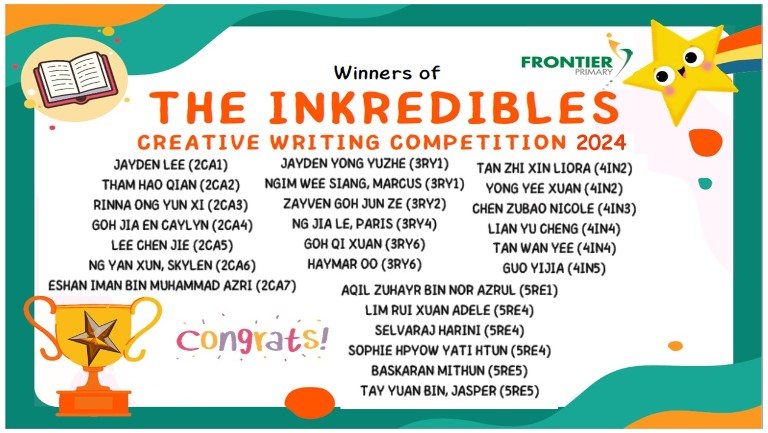
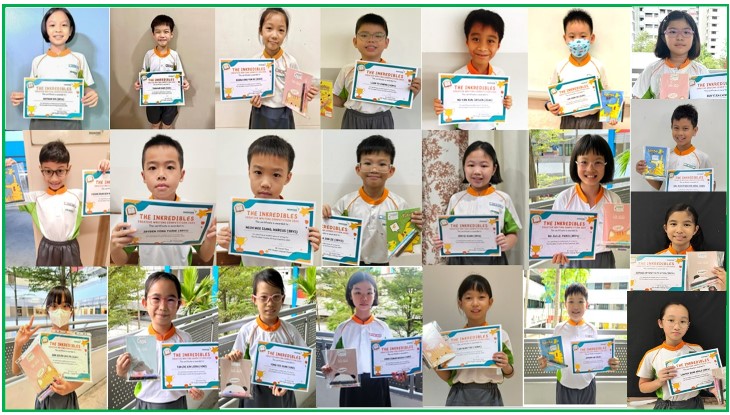
The EL department organised the annual Inkredibles Creative Writing Competition during the June school holidays in 2024 to encourage and inspire our Primary 2 to 5 Frontierers to unleash their creativity and showcase their flair in writing. This competition aims to provide a meaningful activity for our students and promote student agency in them. A total of 25 Frontierers were affirmed for their excellent pieces of writing. We look forward to receiving more creative submissions in 2025!
Excel@Frontier – English Language Stretch Programme
The English Language Stretch Programme aims to develop our students to become empathetic communicators, discerning readers and creative inquirers. Selected Primary 4 and Primary 5 students participate in challenging activities in Oracy, Writing and Literature to hone and sharpen their language skills. This programme also provides our students opportunities that allow them to challenge themselves further through the participation of external oratorical and writing competitions organised by GEB, and assuming the role of an emcee during school events. Some of them also participate in a Cluster Partnership programme where they will be able to exchange ideas and learn from like-minded students from schools within the cluster.
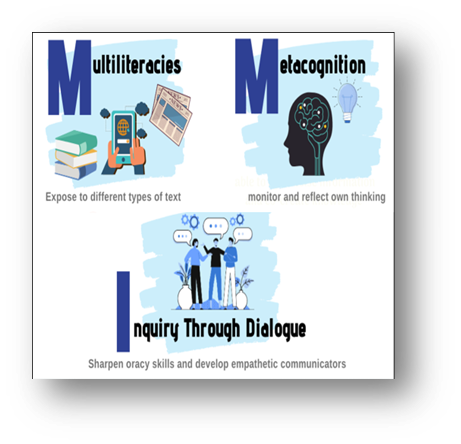
The lessons in this programme are developed with a focus on:
Multiliteracies
Meta-cognitive strategies and
Inquiry through Dialogue.
1. Learning Support Programme
The Learning Support Programme (LSP) is an MOE-initiated programme which aims to provide early intervention and support for selected Primary 1 and Primary 2 students in their learning. The objective of LSP is to equip students with basic literacy skills so that they can access learning in the regular classroom. These lessons are conducted in small groups daily during school curriculum hours by a trained Learning Support Coordinator (LSC).
2. School-based Dyslexia Remediation
The School-based Dyslexia Remediation (SDR) programme aims to provide support for Primary 3 and Primary 4 students who have been identified through a systematic screening process for dyslexia conducted at the end of Primary 2. This programme seeks to enable the selected students to acquire coping strategies in reading so that they will be better able to cope with their learning in school. Teachers will use a systematic set of strategies and activities which have been carefully designed by MOE in this programme.
3. Reading Remediation Programme
The Reading Remediation Programme (RRP) aims to provide support for Primary 3 and Primary 4 students who face consistent difficulty in reading despite having completed the Learning Support Programme in Primary 1 and Primary 2. This MOE-initiated programme exposes students to a range of strategies for reading comprehension which will enable them to recognise words and read grade-level texts with fluency and comprehension.